Cairo, Luxor, Western Desert Oasis 8 days 7 nights
Cairo - Luxor - Western Desert Oasis
Duration
Max People
50
Min Age
5+
Overview
Day 1 (Friday): Cairo (D)
- Arrive at Cairo airport where our representative will meet and assist you at the airport, transfer and check-in at the Hotel, overnight at your hotel.
Day 2 (Saturday): Cairo (B.D)
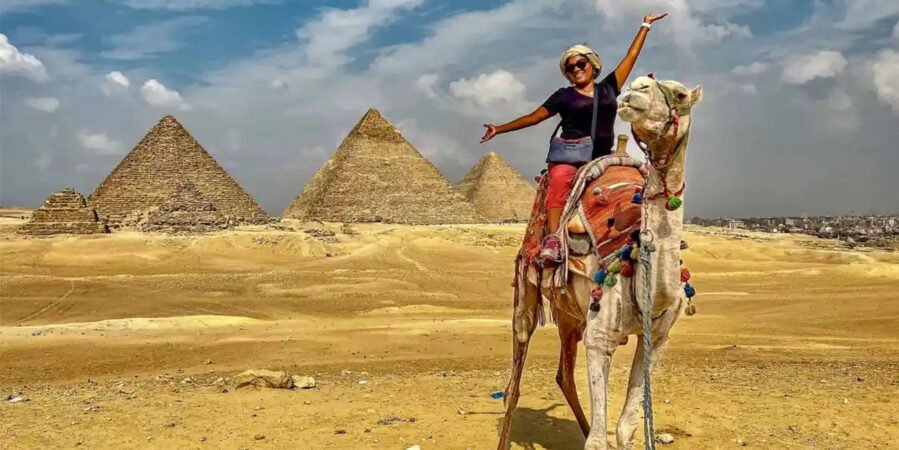
- After breakfast our friendly guide will accompany you to the awe-inspiring Pyramids and Sphinx at Giza to be transported back to the time of the ancient Egyptians. Free evening (Optional Cairo by Night).
Overnight at your hotel.
Day 3 (Sunday): Cairo/ Baharia (B.L.D)
- In the morning our representative will pick you up from the hotel to start our safari trip by cars 4WD, Visit the “English House”to watch the sunset over the desert.
- The English house which was a lookout post during World War I is today in ruins, but it's location on "the Black Mountain" give a unique panorama view over the northern part of the Baharia Oasis.
Overnight in Baharia Oasis.
Day 4 (Monday): Bahriya/ White Desert (B.L.D)
At Baharia Oasis we will visit
- Alexandre the great temple
- The tomb of ZedAmonEfAnkh
- The tomb of his son Bannentiu
- The ancient Roman spring Ain Bishmu.
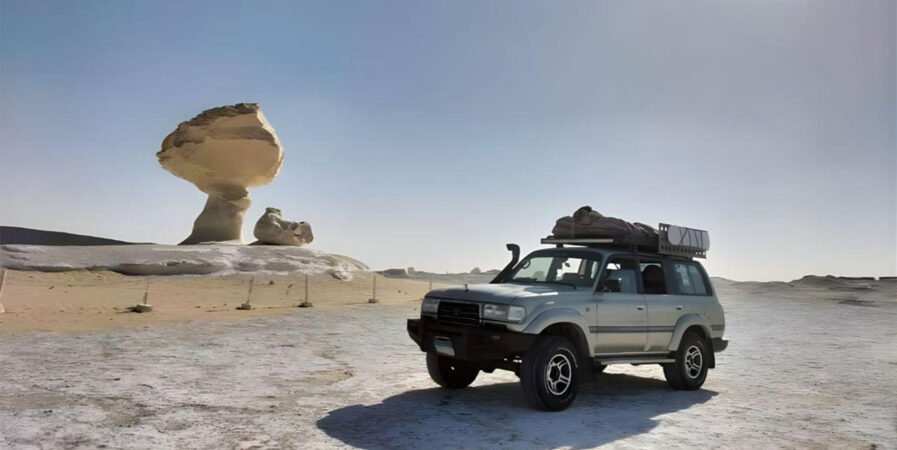
The early morning is for visits around Baharia Oasis. There are several ancient temples in the oasis, The most famous is the one that has the cartouche (Pharaonic name presentation) of Alexander the Great. Unfortunately the combination of wind, location and time has eroded these temples and there is today not much left to see. We are going to visit the museum with some of the amazing "Gold Mummies" found here just recently. Further two ancient Egyptian tombs, first the tomb of ZedAmonEfAnkh and then the tomb of his son Bannentiu. Before starting our journey deeper into the desert, we will visit the ancient Roman spring Ain Bishmu and see how the ancient irrigation system could provide enough water for the farming land. Back to your four-wheel car, the journey goes south - but we can't leave Baharia before visiting the Crystal Mountain and the Black Desert with it's many black topped mountains. Please remember when coming to places as the Crystal Mountain: "Take nothing with you, leave nothing behind". Out of the Baharia depression and down the escarpment to Farafra Oasis, one will soon start to see smaller white chalk cliffs - a forewarning of the adventure ahead. The white cliffs "grows" going south - and suddenly you are in the White Desert . If any destination can be called "magic ", then it's the White Desert.
The Governorate of Wadi Gedid work today together with the Egyptian Ministry of Environment on protecting the White Desert through making it a National Natural Preserved area. Before the magic night under the stars, in this one of the greatest treasures of our planet - we will visit the "El Bahr " Cave with wall paintings from prehistoric man. The name "El Bahr" come from the word "sea" as one here find remains from the ocean once covering this area. Ostrich eggs and other fossils have also been found here. Overnight in camp in the White Desert.
Day 5 (Tuesday): Farafra/ Dakhla (B.L.D)
- Morning dive in the hot spring of Bir Sitta
- Take a tour in Farafra Oasis.
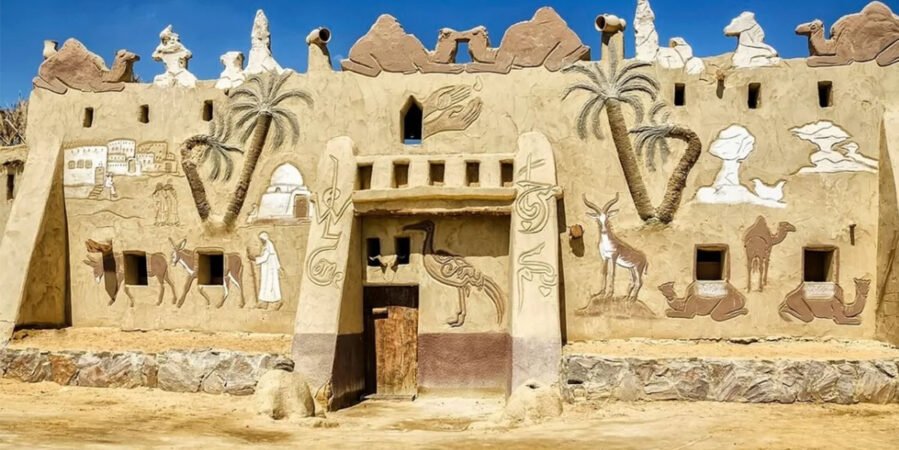
- The old Islamic town of Qasr Dakhla
After a magical, but often cold night in the White Desert, a morning dive in the hot spring of Bir Sitta is a most welcome start of the day. Farafra, or the "Land of the Cow" as it was named in Ancient Egyptian times, was up to recently the most remote human settlement in the desert. So remote that it was not long time ago when a representative of the Oasis had to take his camel and ride to Dakhla Oasis to find out what day they should perform their Friday prayers, as the inhabitants had totally lost track of the days. Today the inhabitants are "mixed", as farmers have immigrated from the Delta and the Nile Valley. We will see the old city as part of the new agricultural areas of Farafra during our visit.
From Farafra we drive south towards Dakhla Oasis . In this huge green farming oasis we will visit:
The old Islamic town of Qasr Dakhla in it's desert-medieval style, built on top of a city from Roman times. Mut, the center of Dakhla is still using it's Ancient Egyptian name after the goddess of Waset (Luxor), and here we will visit the remains of the old city Qasr Mut.
The small but important Ethnographic Museum in Mut give aunique glimpse inside the traditional culture of the oasis. Plan of a traditional house, locally produced items as dresses, jewelry, rugs and more. The village scenes with clay figures by the local artist Mabrouk are our wide screen in to this culture. The local culture itself have it's wide screen "out of" the culture in the next house, as that's the local cinema. Further visits will take you to the "Temple of the Rock " and the Colored Mountain Overnight in Dakhla.
Day 6 (Wednesday): Dakhla/ Kharga (B.L.D)
- In the morning we visit The unique "upside down" mastabas
- Museum where artifacts from the whole of Wadi Gedid's Ancient Egyptian
- The Amon temple in Hibis
After breakfast we will visit the unique "upside down" mastabas (burial monuments from the Ancient Egyptian Old Kingdom) found close to Balat. Important monuments, as the governors of Dakhla buried here show the importance of the Oasis already in times the Pyramids where built in the Nile Valley - some four thousand years ago. Then it's time to say goodbye to the beautiful Oasis of Dakhla, and start our drive towards the last oasis for our desert journey. This is the Kharga Oasis, the center for the Governorate of Wadi Gedid - a Governorate responsible for 40 percent of Egypt's land area.
Kharga: Visits in Kharga will of course have to include the Museum where artifacts from the whole of Wadi Gedid's Ancient Egyptian, Christian and Islamic periods are exhibited. The Amon temple in Hibis is one of the only two temples known built during Persian rule of Egypt (26th Dynasty). The inscriptions on the later built Roman gate give very important understanding about Roman imperial rule in Egypt. After Christianity came to Egypt with St. Mark the Evangelist, the Christian community was in periods under hard prosecutions from Roman rule with thousand and thousand of martyrs. Many fled to the desert for protection. Kharga was one of these places and the result of this is that we in Bagawat got one of the oldest and best-preserved Christian cemeteries in the world.
Hibis temple: On top of a hill close to Hibis lies the Roman temple-fortress Nadura, a typical lookout as the English House visited in Baharia - apart from the fact that Nadura was built nearly two thousand years earlier.
Day 7 (Thursday): Kharga/ Luxor (B.L.D)
- The old market area of Kharga.
- The village New Baris
We cannot leave the center of Kharga Oasis before you got the opportunity to visit the old market area of Kharga. The market is mainly serving the local population, but as visitor you will first of all be able to see the real desert market. Then it will always be items as hand-woven baskets that are good items to have back from the journey, and your "souvenir" will be a small contribution to the local industry as well. Especially Dakhla and Kharga have many beautiful and locally produced crafts as the mentioned baskets (most made from palm leaves), mats, rugs, pottery, some jewelry (silver work basically), local dresses and the traditional hats made of palm leaves in Dakhla.
Before leaving the oasis depression we will drive south passing many villages also belonging to Kharga Oasis. Of newer history the village New Baris is of special importance, as it was here the word renowned architect Hassan Fathy tried to build a village for the oasis. Now close to deserted, it still have the mark of a grand idea and a beautiful architecture built on local traditions and in local material. The counterpart to New Baris is Hassan Fathy's New Gourna in Luxor.
Leaving the area where the prehistoric Nile was flowing, we are driving east towards the Nile and the famous Nile Valley - or should we rather say the "Nile Oasis"? Fact is that the thin valley is a long Oasis surrounded by waste deserts on both sides. The Western Desert (before named the "Libyan Desert") - which we have traveled, and in East the "Eastern Desert" (formerly the "Arabian Desert") which cover the area all the way to the Red Sea.
Overnight in Luxor.
Day 8 (Friday): Luxor/Cairo (B.L)
- After a good breakfast we will visit some monuments from the times of Ancient Waset (or Theben which the Greek called Luxor later). Then will be transferred to Cairo for your departure flight back.
Package includes the following:
Meals:
- Cairo; Half Board Bases
Transportation:
- The entire itinerary from by 4WD Toyota land Cruiser maximum of 5 pax per car
Tented camp will include:
- Spacious, well ventilated dome tents including Mattresses, blankets, sleeping bags
- All necessary cooking gear, kitchen utensils, mugs and glassware
- Fire grill and cooking stoves
Accommodation
- Best hotels in the relevant locations
Food and beverages
- Picnic lunch or at a local restaurant
- On board of the 4WD every pax will have a 300 cl mineral water at disposal per day
Visits and excursions
- All entrance fees and permissions for all visits
- Professional Desert guides
Practical information:
- Insurance: All cars and participants joining our tours are insured against accidents.
Participants should bring:
- Hats, sun glasses
- Sun cream
- Prescription medicine
- Passport’s and copies
- Sandals
- Bathing suits
- Sweatshirts and trousers for night time
- Shorts and t-shirts for mornings
- Scarf
- Flash light
- Depending on the location, expect basic conditions and some long driving days.
Tour leader should be notified of any special medical requirements (Diabetes, Blood pressure)
Book This Tour